Filet Mignon with Red Wine Reduction
Highlighted under: Comfort Kitchen
I absolutely love cooking filet mignon, especially when it's complemented with a rich red wine reduction. This recipe is a showstopper, perfect for special occasions or when I want to impress my guests. The tender cut of beef paired with the robust flavors of red wine creates a harmonious dish that satisfies both the palate and the heart. With a touch of herbs and a simple cooking technique, I can elevate this classic dish without spending hours in the kitchen. Let’s dive into the recipe!
Making filet mignon with a red wine reduction is one of those techniques I’ve honed over the years. Recently, I experimented with a combination of shallots and thyme to complement the beef's richness. The reduction process allows the wine to deepen in flavor while beautifully thickening, which makes every bite a delight. Each time I perfect this dish, I learn more about balancing flavors and textures.
A tip I’ve found helpful is to let the filet rest before serving. This simple step locks in juices and makes the steak even more tender. Add a touch of freshly cracked black pepper before plating, and you'll truly elevate this indulgent experience. Cooking can be so rewarding!
Why You'll Love This Recipe
- Melt-in-your-mouth texture that highlights the quality of the filet
- Decadent red wine reduction that enhances each bite
- Effortlessly impressive for date nights or celebrations
Mastering the Perfect Sear
Achieving the perfect sear on your filet mignon is crucial for enhancing flavor and texture. Preheat your skillet over medium-high heat until it is hot enough that a drop of water sizzles and evaporates immediately. I recommend using a heavy-bottomed skillet or cast iron for optimal heat retention. When you add the seasoned steak, it should sizzle immediately; this sound indicates a good sear. For a 1-inch thick steak, aim for 4-5 minutes on each side for medium-rare, using an instant-read thermometer to check for an internal temperature of around 130°F.
Avoid moving the steaks around while they cook; this ensures a nice crust develops. If you’re looking for hints to avoid overcooking, look for a nice dark brown color on the crust. If you notice the edges beginning to char, reduce the heat slightly. In the case of overcooking, if you’re at risk of it being well done, pull the steak at 125°F for carryover cooking, as the temperature will rise about 5°F while resting.
Balancing the Red Wine Reduction
The red wine reduction is the heart of this dish and should be approached with care. Choosing the right wine can transform the sauce—opt for a good quality Cabernet Sauvignon that you’d enjoy drinking. As the wine reduces, it concentrates in flavor and sweetness, so allow it to simmer gently rather than boiling vigorously. This typically takes about 10-12 minutes; keep an eye on it to prevent burning by stirring occasionally. The sauce should become glossy and coat the back of a spoon when it’s ready.
Incorporating fresh herbs like thyme adds depth; feel free to experiment with rosemary or even bay leaves for varied flavors. For a touch of acidity, consider a splash of balsamic vinegar at the end of the reduction process, tasting to balance the flavors. Furthermore, if you prefer a richer flavor, adding additional beef broth can deepen the sauce with a robust umami base, which is especially delightful when paired with the filet mignon.
Serving and Presentation Tips
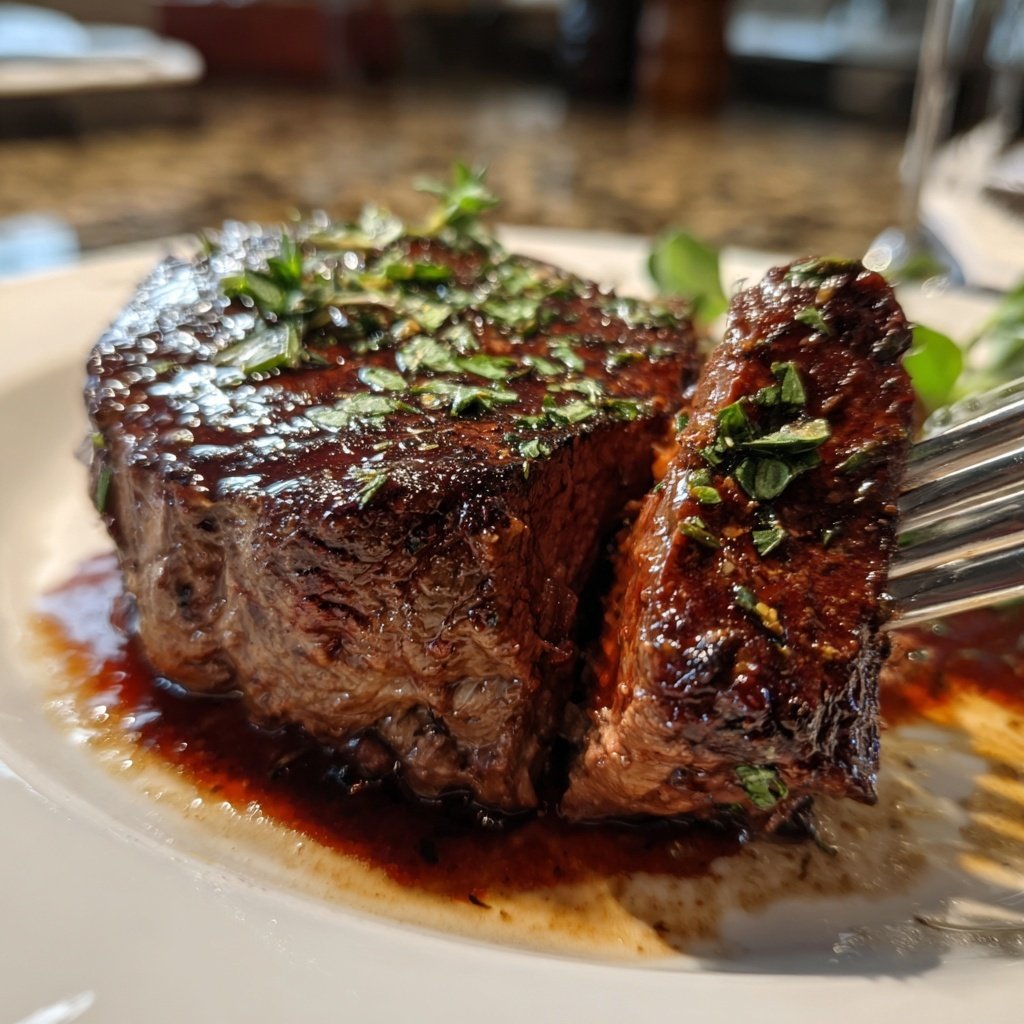
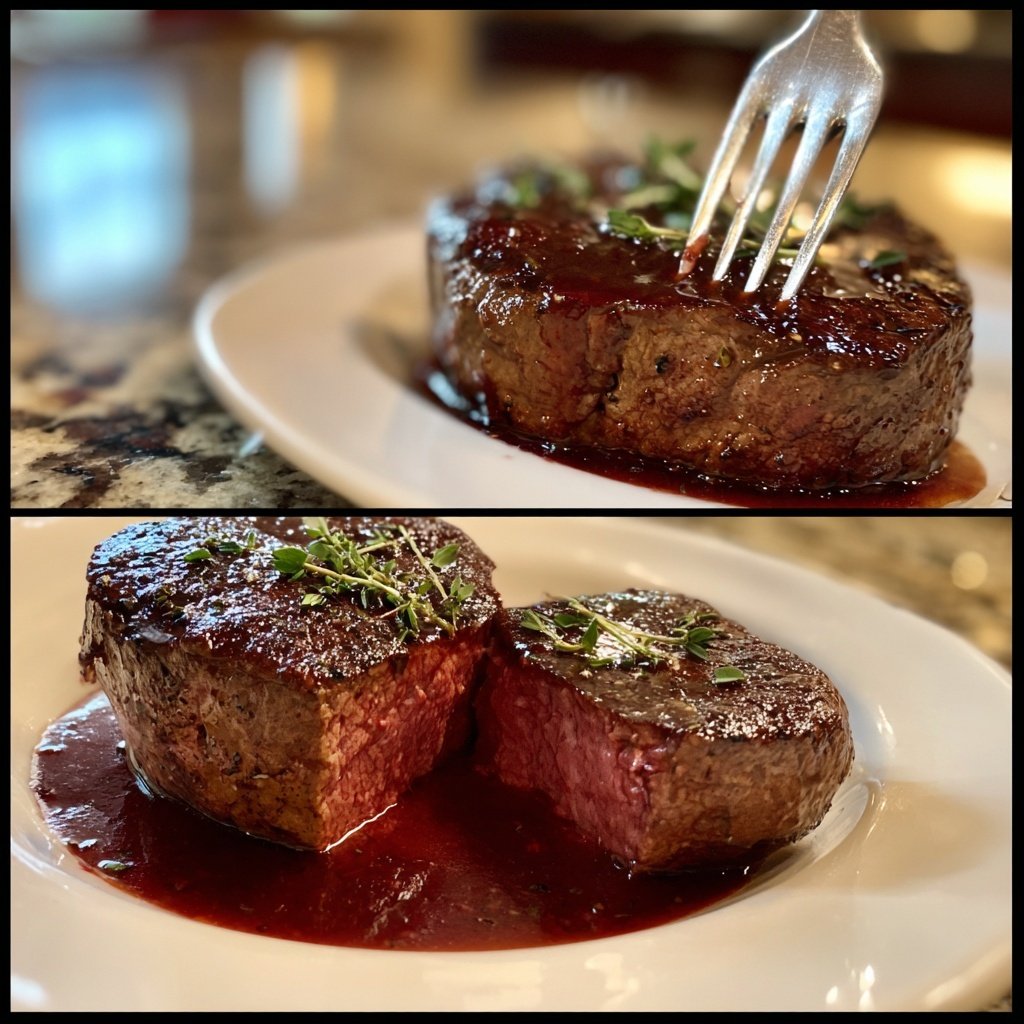
When it comes to serving filet mignon, presentation can elevate the dining experience. After slicing the steak, arrange the pieces artfully on the plate, which not only looks appealing but also helps showcase the tender texture. A drizzle of the red wine reduction across the steak not only enhances flavor but also adds vibrant color. For an elevated touch, sprinkle with flaky sea salt and a garnish of fresh thyme, which not only looks beautiful but complements the flavors in the dish.
Consider pairing this with side dishes that contrast the richness of the filet, such as a light arugula salad or roasted vegetables. If you have leftovers, store the steak and sauce separately to maintain texture and flavor. Reheat gently on a low flame to prevent overcooking and drying out the steak. With these tips in mind, your filet mignon with red wine reduction will impress both visually and gastronomically!
Ingredients
Gather the following ingredients to create a perfect filet mignon with a red wine reduction:
Filet Mignon
- 2 filet mignon steaks (6-8 oz each)
- Salt and pepper to taste
Red Wine Reduction
- 1 cup of red wine (preferably Cabernet Sauvignon)
- 1 shallot, finely chopped
- 2 tablespoons unsalted butter
- 1 teaspoon fresh thyme, chopped
- 1 cup beef broth
Make sure all ingredients are fresh for the best flavor.
Instructions
Follow these steps to prepare your filet mignon with red wine reduction:
Prepare the Steak
Season the filet mignon steaks generously with salt and pepper on both sides. Heat a skillet over medium-high heat, and add a tablespoon of butter. When the butter is melted and bubbly, add the steaks and sear for about 4-5 minutes on each side, depending on thickness and desired doneness.
Make the Red Wine Reduction
Remove the steak from the skillet and let it rest on a plate. In the same skillet, add the chopped shallot and cook for 1-2 minutes until softened. Pour in the red wine, scraping up any browned bits from the bottom, and bring to a simmer. Add the beef broth and thyme, and reduce to half, about 10-12 minutes.
Finish the Sauce
Once the sauce has reduced, whisk in the remaining tablespoon of butter until smooth. Return the steak to the skillet and spoon the sauce over the top to warm slightly. Remove from heat.
Serve
Slice the filet mignon and serve on a plate, drizzling additional red wine reduction over the top. Garnish with extra thyme if desired.
Enjoy your delicious filet mignon with a delightful red wine reduction!
Pro Tips
- For the best results, let the meat come to room temperature before cooking, and use a meat thermometer to achieve your desired doneness.
Ingredient Insights
The filet mignon is renowned for its tenderness and buttery flavor, making it a standout choice for special occasions. Choosing USDA Prime or Choice grade steaks ensures you're working with high-quality beef, which will yield the best results. If you're unable to find filet mignon, consider a tenderloin steak as a suitable alternative that will still provide excellent flavor, though it may require slightly different cooking times due to thickness and fat content.
When selecting your shallot, look for ones that are firm and smooth, avoiding any that have soft spots. Shallots offer a milder, sweeter flavor than onions, which complements the richness of the beef and the wine. If shallots are unavailable, you can substitute with a small yellow onion, just be sure to use less to prevent overpowering the dish.
Make-Ahead Tips
Both the filet mignon and red wine reduction can be prepared in advance to save time on special occasions. You can season the steak a few hours ahead, allowing the salt to penetrate the meat for enhanced flavor. Just keep it covered in the fridge until ready to cook. The red wine reduction can also be made ahead and stored in an airtight container in the refrigerator for up to three days. Reheat gently on the stovetop with a splash of water or additional broth to loosen before serving.
If you're scaling this recipe for a larger group, consider searing multiple steaks in batches, ensuring to not overcrowd the pan, which can lower the heat. Maintain the same cooking technique, keeping an eye on the steaks as oven times may vary. Having extra red wine reduction on hand enriches each plate and invites guests to enjoy this celebration of flavors.
Questions About Recipes
→ What doneness should I aim for with filet mignon?
For filet mignon, medium-rare (130-135°F) is highly recommended to enjoy its tenderness and flavor.
→ Can I use a different type of wine for the reduction?
Yes, while Cabernet Sauvignon is ideal, you can substitute with Merlot or any full-bodied red wine that you enjoy.
→ How long can I store leftovers?
Leftovers can be stored in an airtight container in the fridge for up to 3 days.
→ What sides pair well with filet mignon?
Consider serving it with garlic mashed potatoes or roasted vegetables for a complete meal.
Filet Mignon with Red Wine Reduction
Created by: Phoebe Langridge
Recipe Type: Comfort Kitchen
Skill Level: Intermediate
Final Quantity: 2 servings
What You'll Need
Filet Mignon
- 2 filet mignon steaks (6-8 oz each)
- Salt and pepper to taste
Red Wine Reduction
- 1 cup of red wine (preferably Cabernet Sauvignon)
- 1 shallot, finely chopped
- 2 tablespoons unsalted butter
- 1 teaspoon fresh thyme, chopped
- 1 cup beef broth
How-To Steps
Season the filet mignon steaks generously with salt and pepper on both sides. Heat a skillet over medium-high heat, and add a tablespoon of butter. When the butter is melted and bubbly, add the steaks and sear for about 4-5 minutes on each side, depending on thickness and desired doneness.
Remove the steak from the skillet and let it rest on a plate. In the same skillet, add the chopped shallot and cook for 1-2 minutes until softened. Pour in the red wine, scraping up any browned bits from the bottom, and bring to a simmer. Add the beef broth and thyme, and reduce to half, about 10-12 minutes.
Once the sauce has reduced, whisk in the remaining tablespoon of butter until smooth. Return the steak to the skillet and spoon the sauce over the top to warm slightly. Remove from heat.
Slice the filet mignon and serve on a plate, drizzling additional red wine reduction over the top. Garnish with extra thyme if desired.
Extra Tips
- For the best results, let the meat come to room temperature before cooking, and use a meat thermometer to achieve your desired doneness.
Nutritional Breakdown (Per Serving)
- Calories: 500 kcal
- Total Fat: 30g
- Saturated Fat: 12g
- Cholesterol: 120mg
- Sodium: 90mg
- Total Carbohydrates: 20g
- Dietary Fiber: 1g
- Sugars: 4g
- Protein: 40g